
Verified West Valley City Volume
The clearest modern-city starting point is the University of Utah Marriott Library item titled 1980 Salt Lake City Suburban (Salt Lake County) Directory. Its metadata explicitly lists Draper, Granger, Holladay, Hunter, Kearns, Magna, Midvale, Murray, Riverton, Sandy, South Jordan, Taylorsville, Union, West Valley City, West Jordan, and White City. That matters because it gives a dated directory baseline close to incorporation instead of projecting the modern city name backward into older books.
The collection contains 232 items, not a guaranteed annual run. Publisher and year facets show R.L. Polk & Co. volumes and examples from the late nineteenth century through the late twentieth century. Metadata is not OCR. The research capture did not expose a verified resident line or abbreviation key, so inspect the scanned page before quoting a name, occupation, address, or household mark.
Open the official source before relying on this image.
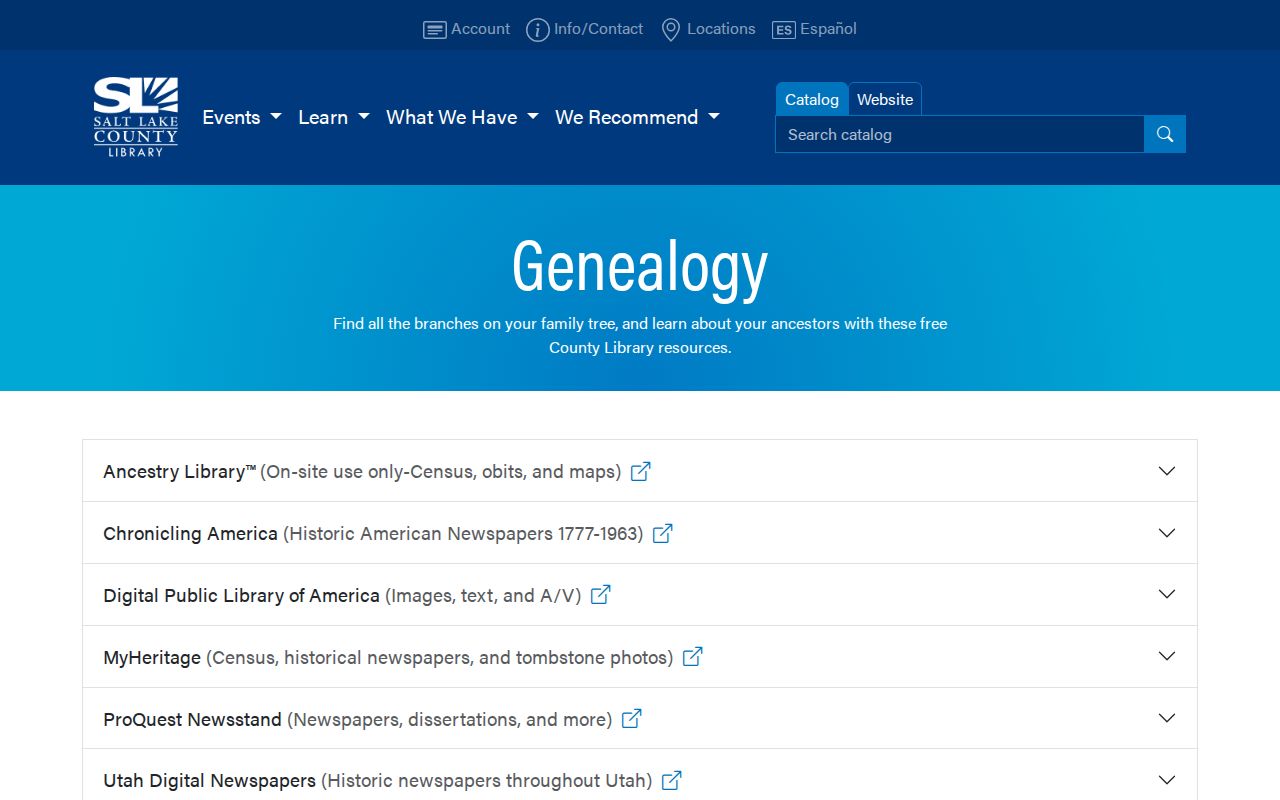
The library research image points to the local databases that complement the University of Utah scan when a directory page is image-only.
West Valley City Directory Years
The dated items below are the useful shelf map. Some years are verified item metadata; others are likely suburban bridges whose exact West Valley City page still requires image inspection. Do not describe the list as an uninterrupted run. A good entry records the title, publisher, year, page, place label, and the image or catalog link used.
| Collection or item | Years and reach | Where held | Use |
|---|---|---|---|
| R.L. Polk | 1894-95 Salt Lake City | University of Utah | Pre-city names and businesses |
| Salt Lake suburban | 1915, including suburbs | University of Utah | Search Granger and Hunter labels |
| Polk suburban | 1919 | University of Utah | Pre-incorporation comparison |
| Postwar suburban | 1959, including Granger and Kearns areas | University of Utah | Subdivision-era households |
| Late suburban | 1974 and 1977-78 | University of Utah | Compare before incorporation |
| Salt Lake County suburban | 1980, explicitly includes West Valley City | University of Utah / UHS | Modern-city baseline |
Other collection examples include 1923, 1927, 1939, 1951, 1956, 1961, 1965, 1971, 1976, 1978-80, 1985, 1987, and 1989-90. Coverage is uneven. Ask the catalog or Research Center for the missing year rather than assuming a volume never existed.
Granger and Hunter Before 1980
A modern West Valley City address may have been documented in a different community. Harker settlement began in 1848, Granger settlers arrived in 1866, and Hunter families developed agricultural areas before incorporation. The 1900 counts listed by city history, Hunter 354 and Granger 617, belong to earlier geography. The 1950 Granger-Hunter Improvement District, 1948 subdivisions, and the 1958 opening of Granger High explain why infrastructure and household records often appear under a district or suburb.
Search the exact street and subdivision with each historical label. The 1932 Winder Dairy at 4400 W and 4100 S, the 1940s Fassio Egg Farms at 5200 W and 3650 S, and the later Valley Fair Mall era are place anchors for newspaper and directory searches. They are context, not evidence that a named person lived at one of those sites.
Polk Pink Pages by Address
Utah Historical Society house-history guidance gives the reverse-directory route a clear boundary. After 1924, Polk “pink pages” can answer who lived in a specific house during a specific year. Find the correct volume, turn to the address section, read the abbreviation key, and record the page and spelling exactly. A reverse entry may point to an occupant or householder lead, while the name pages can add occupation, employer, spouse notation, or a cross-reference.
Before 1924, use Preservation Office house files and newspapers, then anchor the address with Salt Lake County Recorder and Assessor records. The Research Center at 300 S Rio Grande, Salt Lake City, accepts reference questions by phone and email and recommends spelling variants. A directory line does not prove present residence, ownership, or the identity of every person in a household.
Read a Directory Line Carefully
Record what the scan actually shows. A typical checklist includes surname and given name, spouse or relationship notation, occupation, employer or business, street address, householder or renter mark if the volume defines one, widow or boarder notation, page number, and a cross-reference to the street index. Never expand “r,” “h,” or another abbreviation until the book’s key confirms its meaning. OCR can split names, misread numbers, or omit an image-only page.
- Name
- Search spelling variants, initials, maiden names, suffixes, and transliterations.
- Address
- Keep the historic street form and later normalized form in separate notes.
- Household mark
- Use only the symbol defined by that volume’s abbreviation key.
- Page and year
- Needed to let another researcher return to the same source.
The collection search page can confirm title, publisher, and scope. It cannot by itself confirm that a particular person line says West Valley City. Visual inspection remains the safe step.
Pair Directories With Other Records
Directories are annual-ish commercial snapshots. Federal census schedules are decennial and become public under the National Archives 72-year release rule. For West Valley City history, census place names are Granger, Hunter, Salt Lake County, and enumeration districts rather than a complete municipal series before 1980. Pair the street, household surname, and age range with the closest released census decade, then check for independent evidence.
Utah Archives and FamilySearch provide useful historical collections. Salt Lake County birth records from 1890-1915, death collections covering 1849-1949, the Utah death index for 1905-1970 or 1975, marriage material, and the Salt Lake City Cemetery collection can add parents, informants, burial, or life-event clues. The cemetery collection is not a West Valley City municipal index. Current certificates remain subject to Utah eligibility and privacy periods.
Newspapers Fill Directory Gaps
The County Library genealogy page links Utah Digital Newspapers, with more than 1,000,000 pages, Utah NewsSearch, Chronicling America, ProQuest Newspapers, MyHeritage, and Digital Public Library of America resources. Search birth, death, marriage, wedding, civic, subdivision, and business notices. Try Granger, Hunter, Chesterfield, West Valley, Salt Lake County, the street, and a surname variant. Newspapers can explain why a household moved or who an estate involved, but an obituary should not be used to infer a living person’s current address.
The West Valley branch at 2880 W 3650 S and Hunter branch at 4740 W 4100 S are sensible places to ask for a paper directory or newspaper title. Ancestry Library Edition is listed as on-site only. Library staff can identify a likely volume or date when a broad online search fails.
Sanborn Maps Need a Local Check
Utah Historical Society describes fire-insurance maps from 1898-1969 and recent Salt Lake City and Ogden releases. The Library of Congress describes Salt Lake City coverage and provides search guidance for city, date, and sheet metadata. No official West Valley City-titled Sanborn set was located in the research. A Salt Lake City or Sandy map can supply valley context, but it does not prove a WVC address, household, or building detail.
Use a map as a supplement to the Recorder legal description, a plat, directory street index, newspaper, or city history page. Preserve the map city and sheet number. Do not silently substitute a nearby city’s map for the absent local series.
Ask for the Missing Volume
When a year is not digitized, contact the County Library or Utah Historical Society Research Center with the address, historic place label, approximate year, and name variants. The library can check newspaper and genealogy resources. The Research Center can explain pink-page practice and pre-1924 house-history sources. University of Utah collection facets can reveal a publisher or neighboring year even when the item page does not expose the relevant scan.
Keep a research log with source title, item URL, volume year, page, search terms, and whether the result came from metadata, OCR, or the image itself. That distinction prevents a catalog statement such as “suburban directory” from becoming an unsupported claim about a particular West Valley City household.